


To discover Japan, the best approach is to let go of the intellect and open yourself up to sensations, as in hypnosis. All you have to do is sit back, in silence, and let yourself be immersed in the atmosphere of the places you visit, especially those that seem the most mysterious. Among these are the Shintō shrines, called jinja in Japanese. Shintō (Way of the Gods), the archipelago’s indigenous religion, embodies Japan’s most ancient and profound soul. A genuine cultural foundation dating back thousands of years, it weaves a living link between the present and the country’s origins. At once a communion with nature, a celebration of life and a space for regeneration, shintō resonates with the most fundamental aspects of hypnosis.
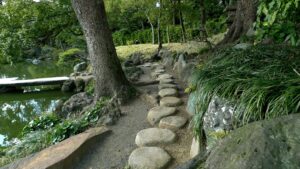
“Every visit to a jinja is a unique and unforgettable experience. As in hypnosis, where each session, each trance, has its own characteristics, its own atmosphere, its own multiple connections. As you stroll through these deeply energetic places, where cedar trees often hundreds of years old invite you into their mysterious shadows, you enter another dimension, a trance (self-hypnosis) that is often surprising. You can’t help but be captivated by the beauty of the place, and its distinctive silence. “1
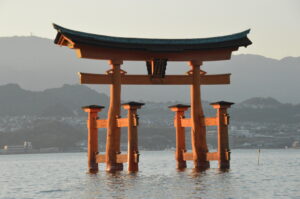
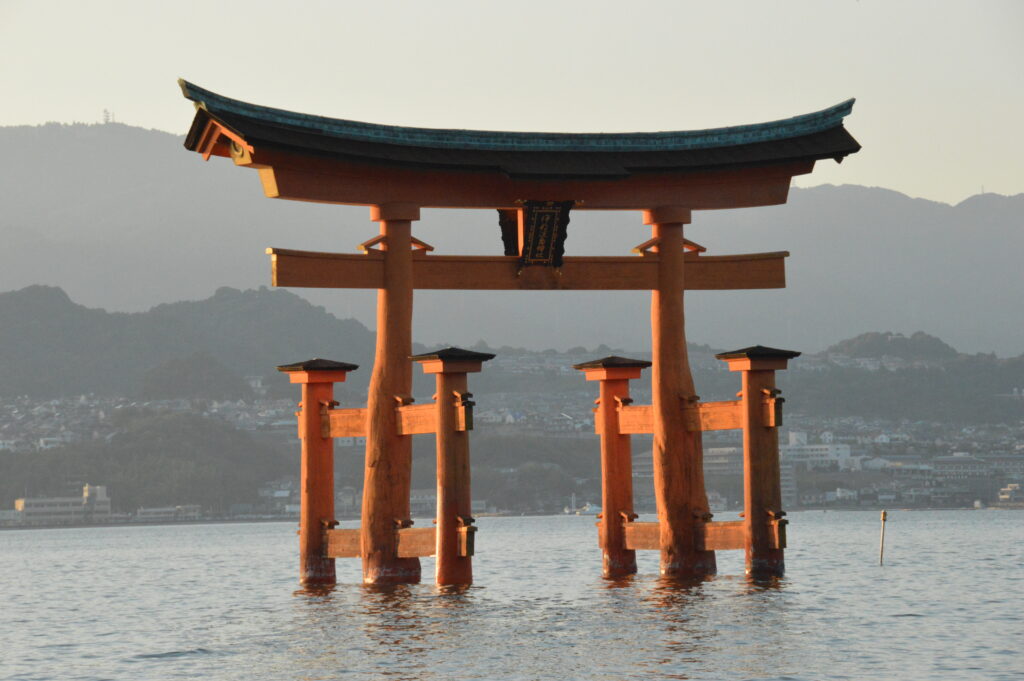
At the entrance to the shrine stands a large portico, often vermilion-red, one of Japan’s most emblematic images. It symbolically marks the transition between the outside world and the sacred space.
This echoes the construction of the resource place in hypnosis, where the person is guided towards the creation of a secure mental space, an inner sanctuary. Similarly, the natural sanctuaries of Shintō – sacred forests, limpid springs, waterfalls – recall certain therapeutic metaphors commonly used in hypnosis: walking through an inner forest, listening to the murmur of an imaginary river, or letting yourself be enveloped by a beneficial waterfall.
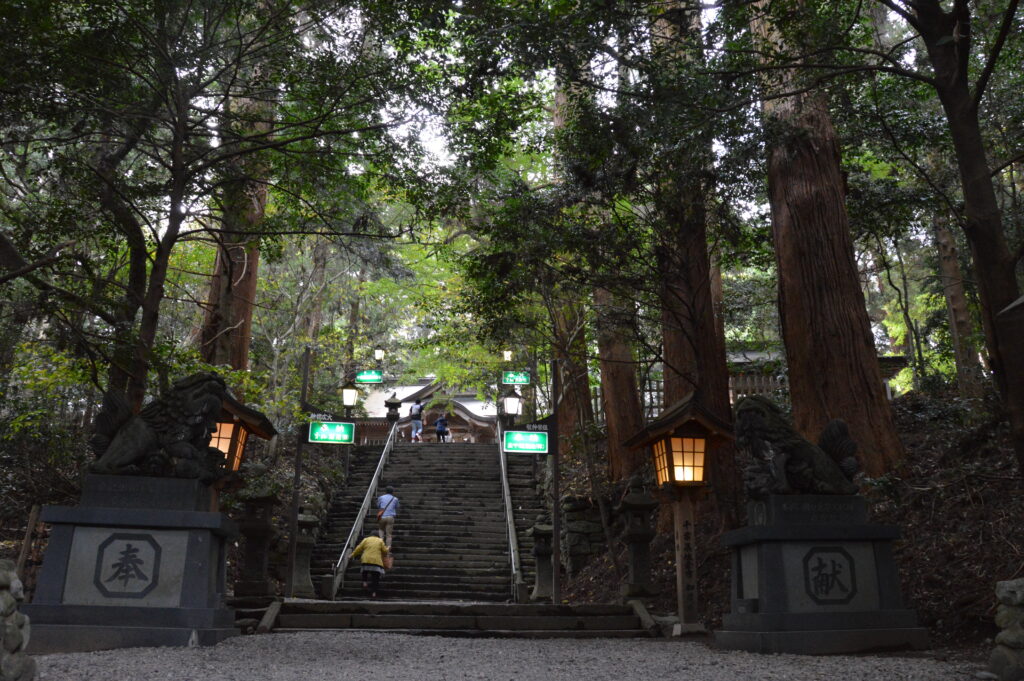
In the Shintō tradition, connection with nature is essential to maintaining physical and mental balance. Gathering in front of a venerated tree, visiting a sanctuary nestled in the heart of a sacred forest or practicing shinrin yoku (forest bathing) are all practices recognized for their health benefits. The Japanese vision of the natural world is not based on a dualism between man and his environment, but on an intimate relationship in which humans and nature coexist like members of the same large family. In hypnosis, we observe how nature permeates patients’ perceptions and plays a genuine therapeutic role.
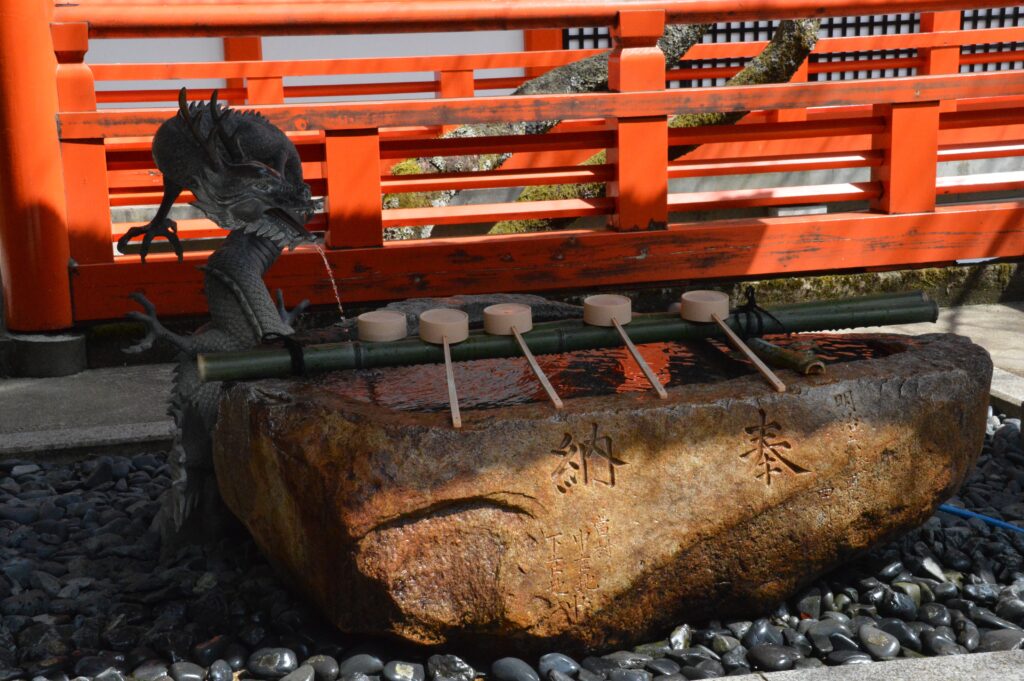
Purification rituals play an important role in Shintō. They aim to eliminate impurities(kegare) affecting physical, mental and spiritual balance. As soon as you enter the sanctuary, an ablution basin invites you to a codified ritual. This approach finds a parallel in hypnotherapy, where at the start of the session the person is guided through the layers of the often agitated, analytical mind to a more fluid, intuitive and profound state. Purification with water is reminiscent of hypnotic inductions based on aquatic metaphors, while the use of salt or fire is more akin to hypnotherapy. evokes certain suggestions of purification by light or flame.
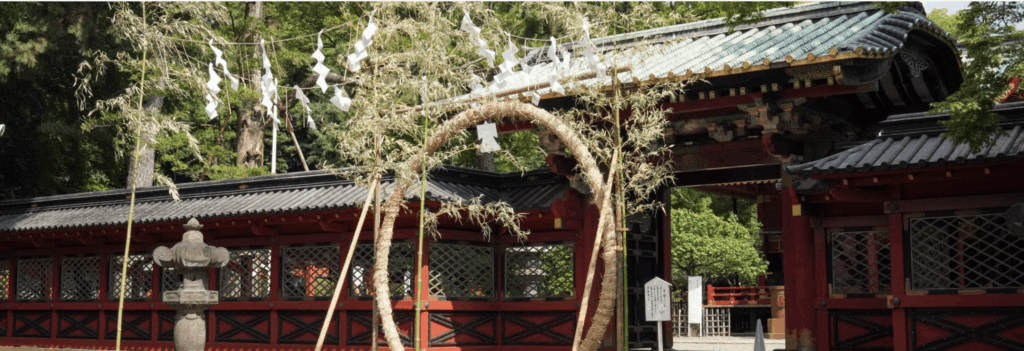
Many Shintō shrines are dedicated to healing practices. These include the Goō jinja (Kyōto), particularly popular for prayers to heal wounds, and the Sai jinja (Nara), which boasts a well containing medicinal water used in certain traditional treatments. During certain ritual festivals(matsuri), priests recite prayers to the deities to ward off illness and restore vitality. These ceremonies, punctuated by drums(taiko), music and dance, represent a form of collective trance. Nagoshi no harae, in June, is a purification ritual in which participants cross a large straw circle to free themselves of accumulated impurities and strengthen their vital energy.
In shrines, the faithful hang ema, small wooden votive plaques, on which they inscribe their prayers and sometimes draw the part of the body to be treated to guide the gods’ help. These plaques are then burned during the dondoyaki, a fire festival celebrated throughout Japan in mid-January, when New Year’s decorations are also consumed to symbolize spiritual renewal and to pray for prosperity in the coming year.
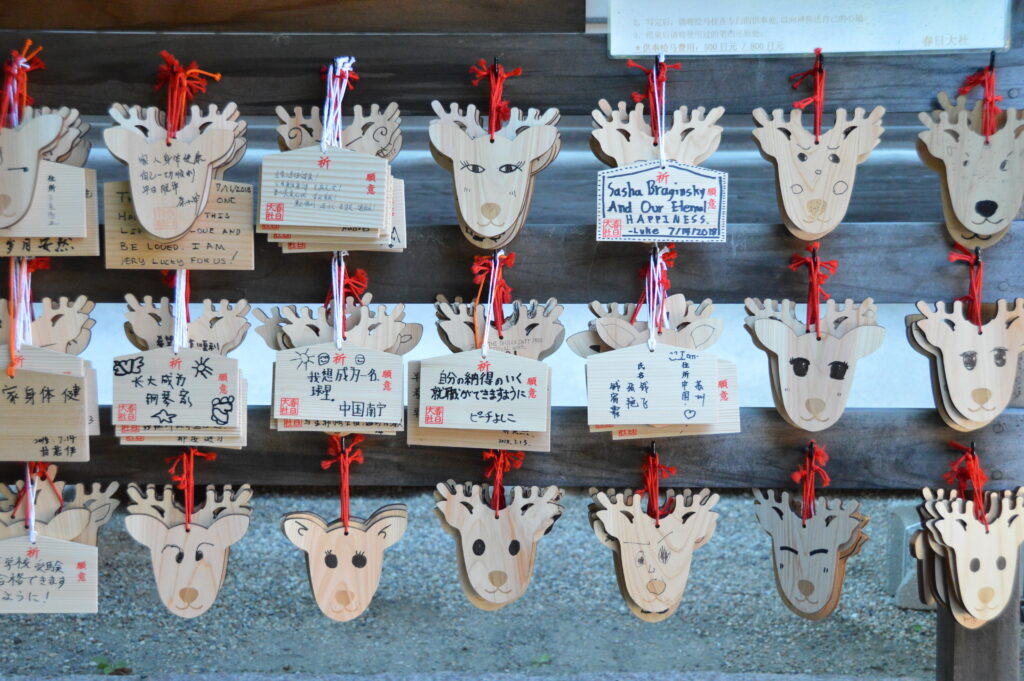
Through these rituals, Shintō illustrates a holistic approach to healing, where the sacred and the healing intertwine in a living relationship between man and spiritual forces, the kami.
In Shintō, kami are invisible entities that influence human life. This idea can be likened to the inner dialogue in hypnosis, where a person can “meet” an inner guide, a benevolent force, who represents an unexplored part of themselves. We could see prayers to the kami as a way of dialoguing with the unconscious, attributing a healing or protective function to a deity. In Créer le réel, Thierry Melchior2 points out that, since the dawn of time, healing traditions the world over have relied on processes similar to what we call hypnosis today. Shamans, priests and healers do not evoke the “unconscious”, but speak of spirits, gods or demons – culturally-appropriate representations which, however, function in a similar way. Hypnosis and Shintō share the same idea of access to an invisible reality capable of transforming the individual.
This perception, rooted in Japanese culture, also permeates the world of manga and anime, particularly Miyazaki’s. In My Neighbor Totoro, the visible and invisible interpenetrate, and dreams are not separate from reality, but enrich it, shape it and give it meaning. Imagination and reality merge into a continuity in which nature becomes the reflection of an eternal life force. This vision turns the invisible into a reality as tangible as the visible, and dreams into gateways to a wider dimension. Japanese productions spread this approach throughout the world, influencing the collective imagination of younger generations and imbuing them with hypnotic perceptions.
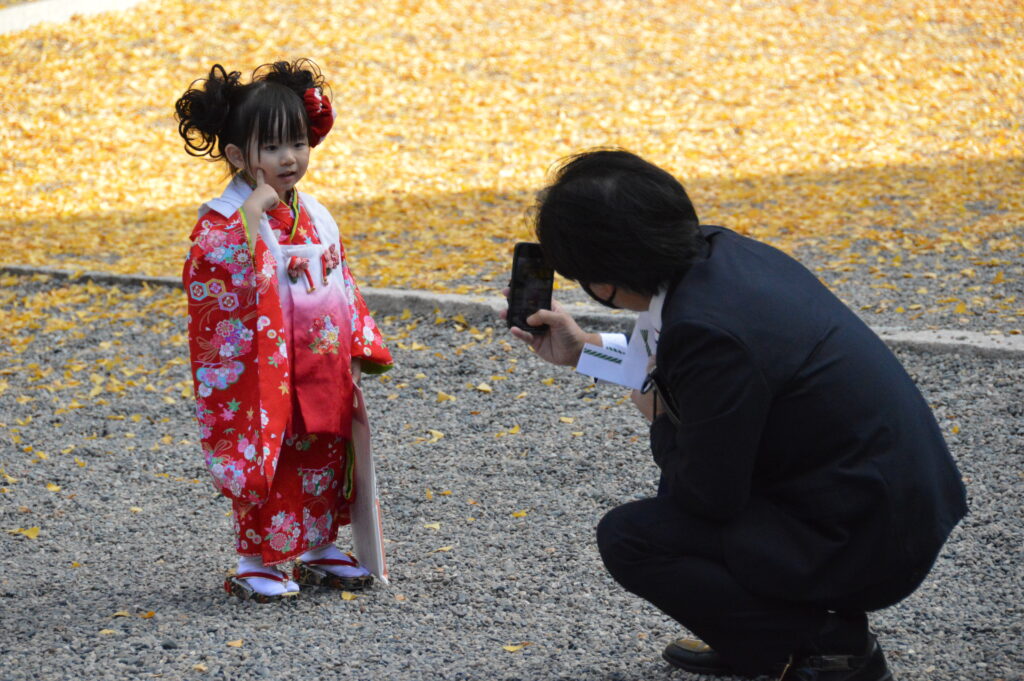
The Japanese go to their local or village shrine to mark key moments in life, such as weddings, the birth of a child, or traditional shichigosan ceremonies at ages 3, 5 and 7. This vital energy is also expressed in festivals marked by joy and fervor. In Ise, the most sacred Shintō site, shrines are rebuilt identically every twenty years, symbolizing a perpetual renewal where past and present intertwine, like an incessant return to the original impetus of life. “Shintō is essentially a life-affirming religion. “3
François Roustang also insisted on this statement. We used to hear him say to patients, “Can you feel that you’re alive?” He would add: “Not alive, doing such-and-such. Not alive, thinking such and such. But simply alive. That’s a fundamental experience.
In this way, the way of the gods and the way of hypnosis share a deep connection with the flow of life. Each, in its own way, reconnects us with the vital forces that animate us, beyond words and concepts. Rekindling this breath of life in a patient, helping him or her to overcome blockages and regain the impetus to exist fully, is the power of hypnosis.
BIBLIOGRAPHY
- Bréchemier Bruno, Hypnose-Japon, Rencontre en résonance, Editions Satas (2024), p.37.
- Melchior Thierry, Créer le réel, Editions du Seuil (1998), p.40.
- Yamakage Motohisa, Shintō, Sagesse et Pratique, Le Prunier Sully (2012), p.63.
Article published in Hypnose et Thérapies brèves, n°77, p.114-118.