


Integrative health: an approach focused on patient well-being
Integrative health was born in the United States in the 1990s, in response to the limitations of traditional medicine in the face of new health challenges such as sedentary lifestyles, stress and changing lifestyles. This approach combines conventional medicine (surgery, chemotherapy, specialized consultations) with complementary therapies (nutrition, adapted physical activity, hypnosis, acupuncture, meditation, etc.), offering comprehensive patient care.
Rather than focusing solely on healing, integrative healthcare also emphasizes prevention and quality of life. It aims to strengthen the therapeutic relationship between therapist and patient, viewing the latter as an actor in his or her own health. Care is personalized, taking into account the patient’s lifestyle choices, culture and beliefs.
The development of this approach is illustrated by establishments such as the Institut Rafaël in Paris, which offers individualized care paths for cancer patients. The Centre Léon Bérard in Lyon and the Hôpital Saint-Vincent in Strasbourg are also following this path, integrating complementary therapies into their care.
In this context, integrative healthcare represents the natural evolution of modern medicine. It is based on scientific data to guarantee the effectiveness and safety of the methods used. The aim is to offer complete patient care, harmonizing traditional treatments and alternative approaches for optimal well-being.
By integrating practices such as hypnosis and mindfulness meditation, as well as art therapy and social prescribing, integrative healthcare invites us to rethink care, valuing the diversity of therapeutic resources and the uniqueness of each individual.
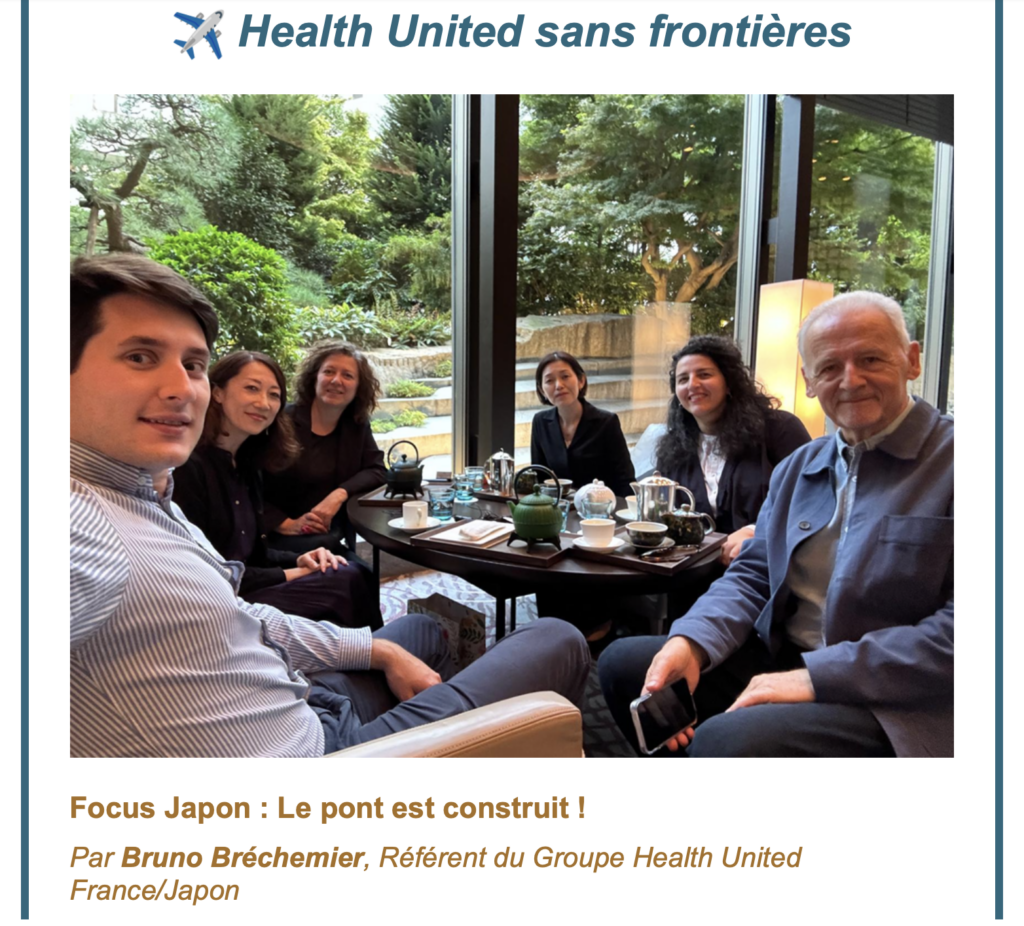
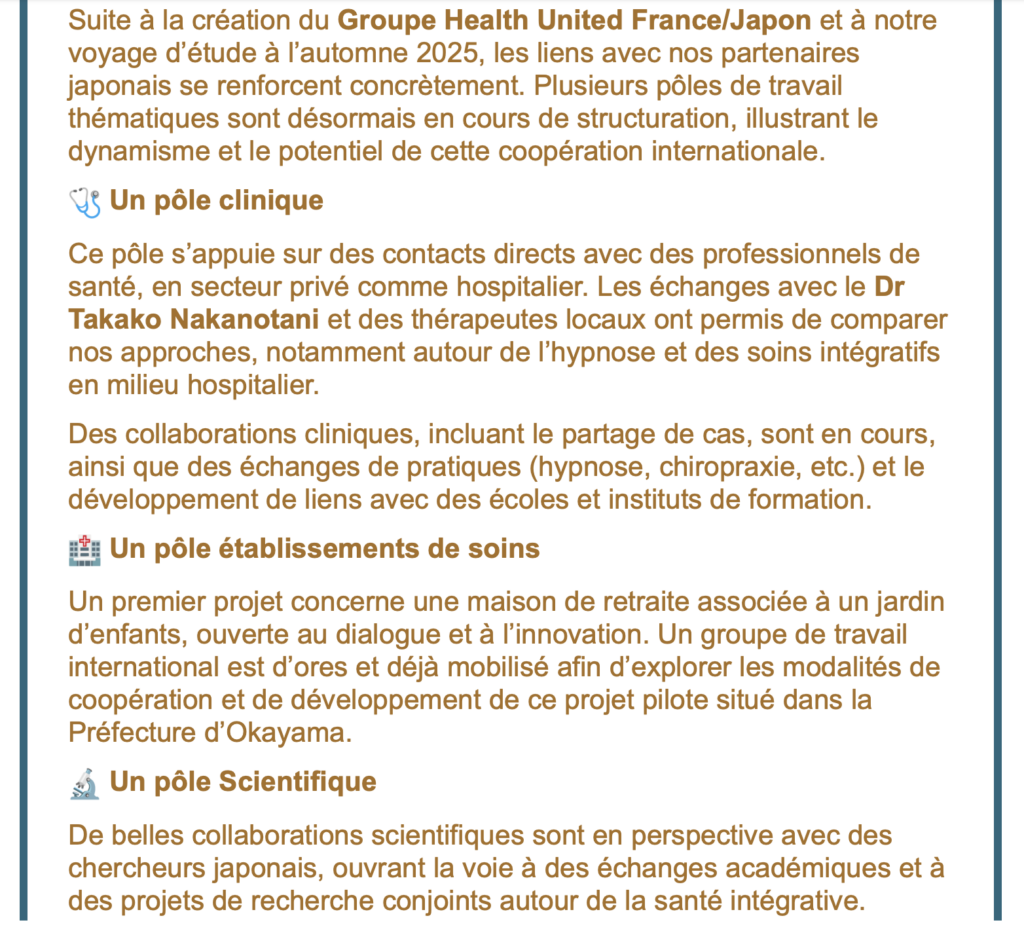
In 2025, a France-Japan Integrative Health Group was formed within the Health United Association, which has been working in this field for many years. Presentations at conferences and in the press report on the various advances made by this international group.
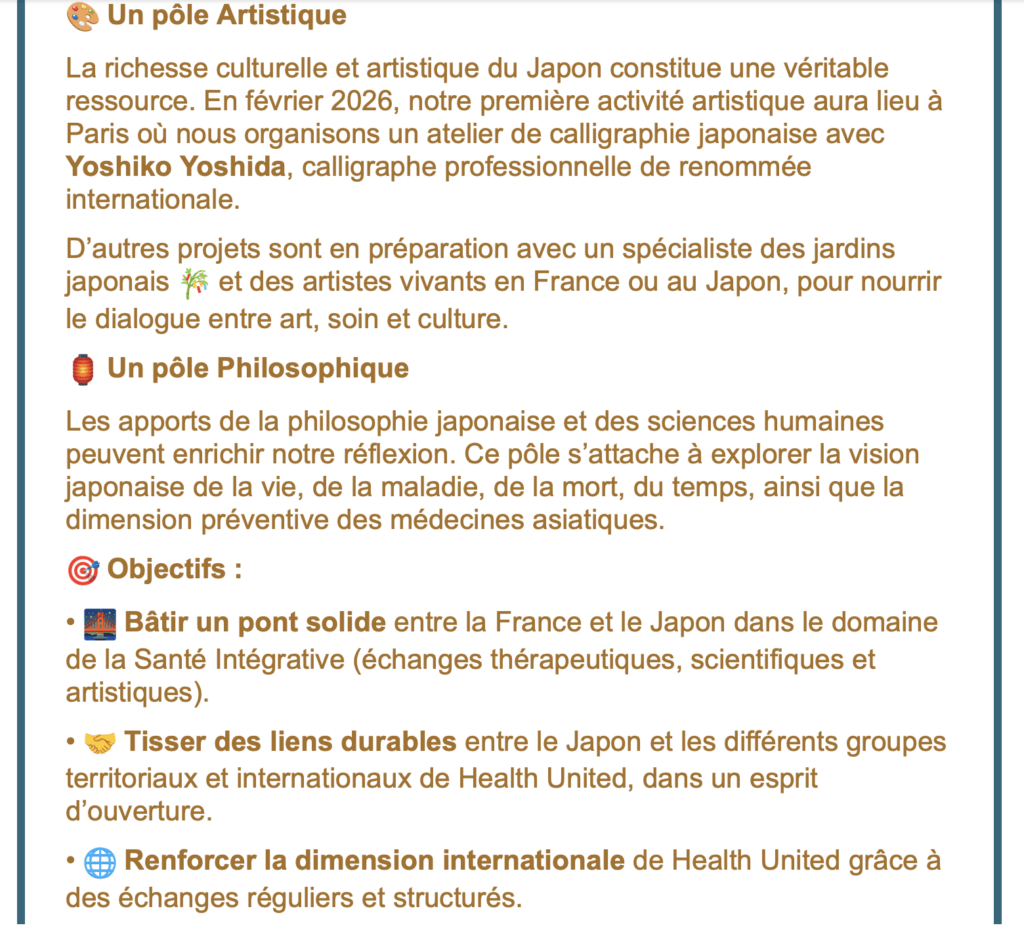
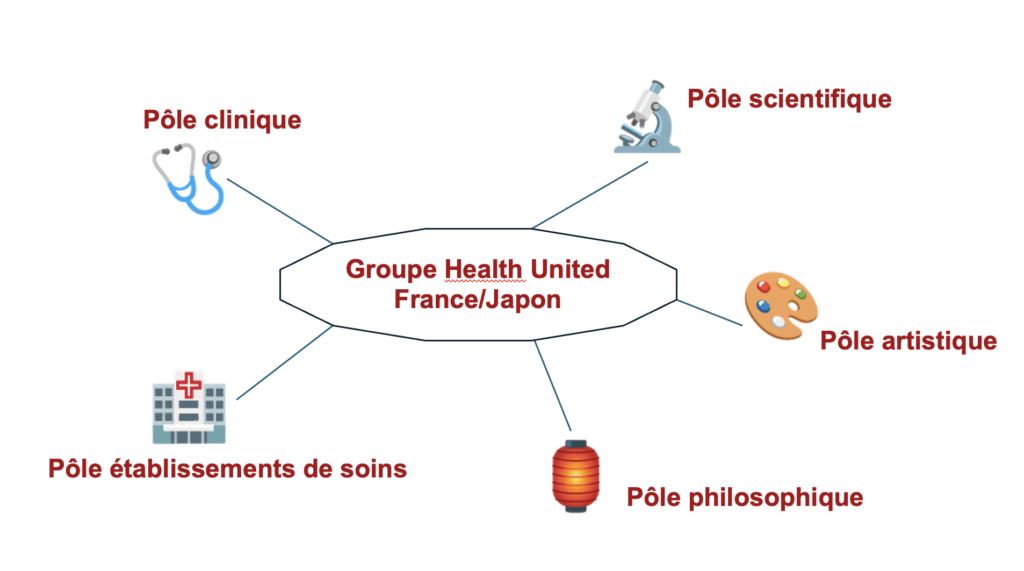
The 5 divisions of Health United’s France-Japan Group
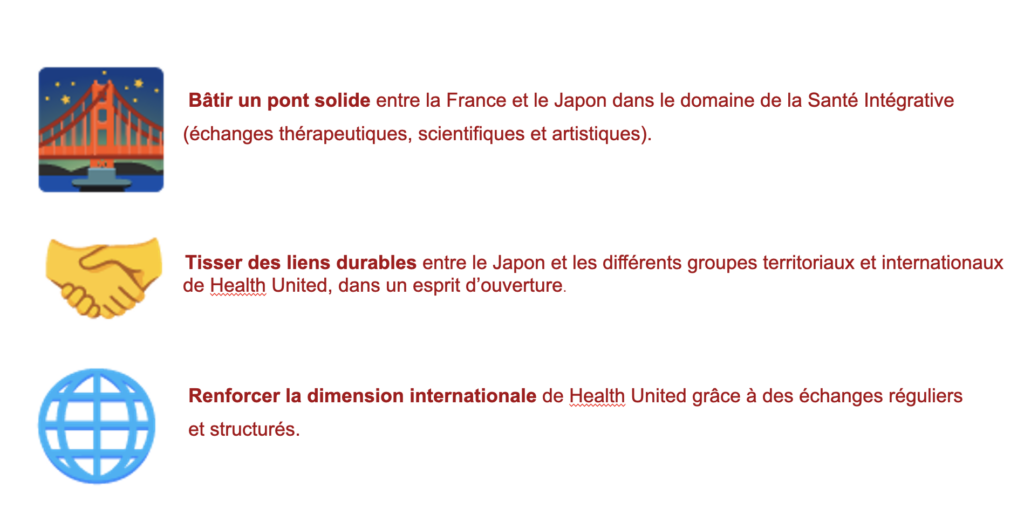
Group objectives
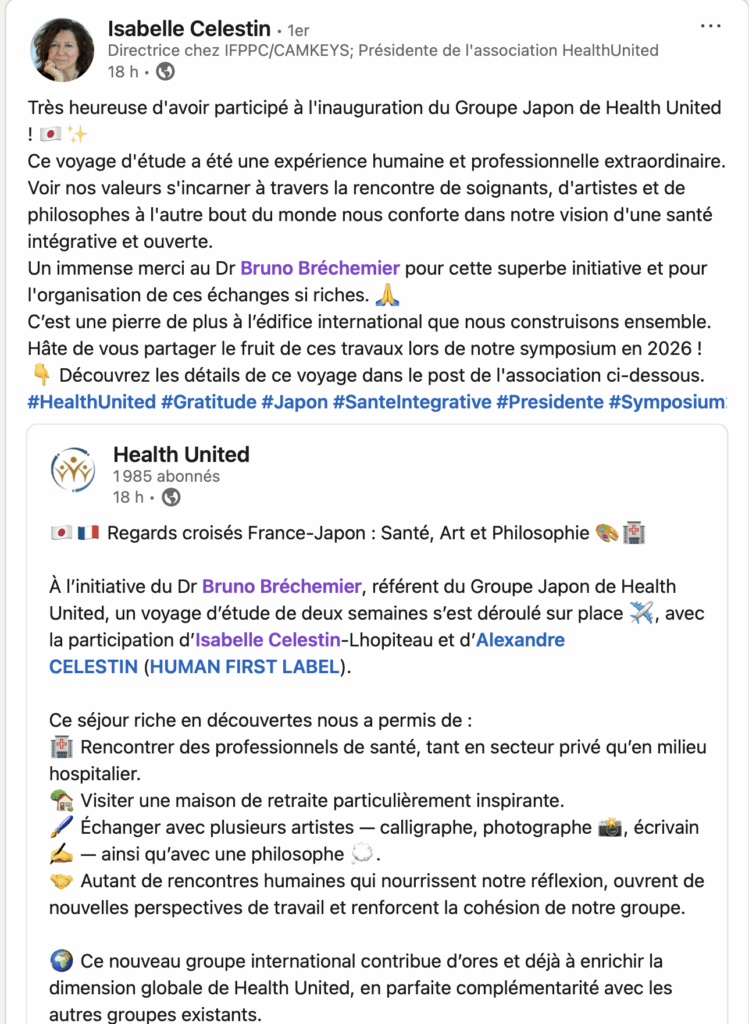
LinkedIn post of 24.11.2025
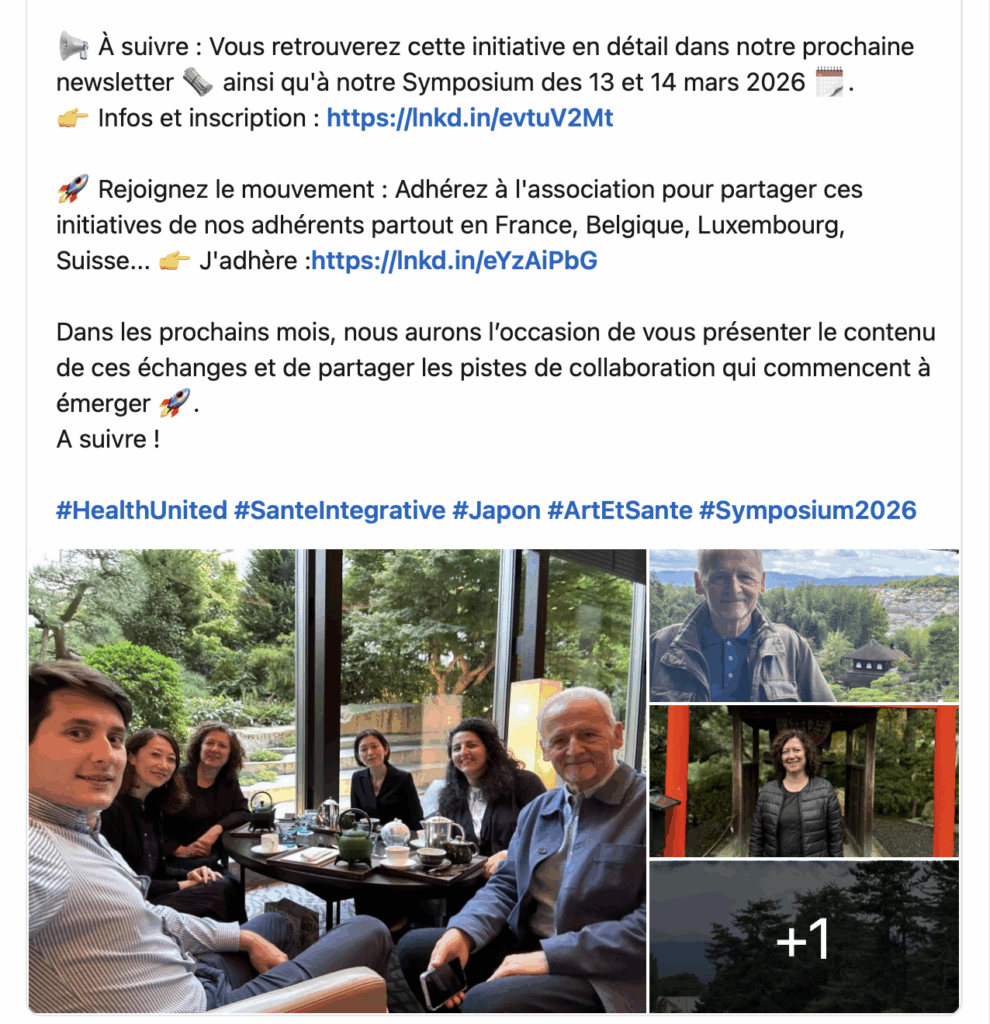
Newsletter Health United from 12.17.2025